HIJAMA BASICS
What Is Hijama? A Guide to Wet Cupping Therapy
Hijama, also known as wet cupping therapy, is a traditional practice that combines controlled suction with small superficial skin incisions. This guide explains what Hijama is, how it works, what happens during a session and the key safety considerations.
In short:
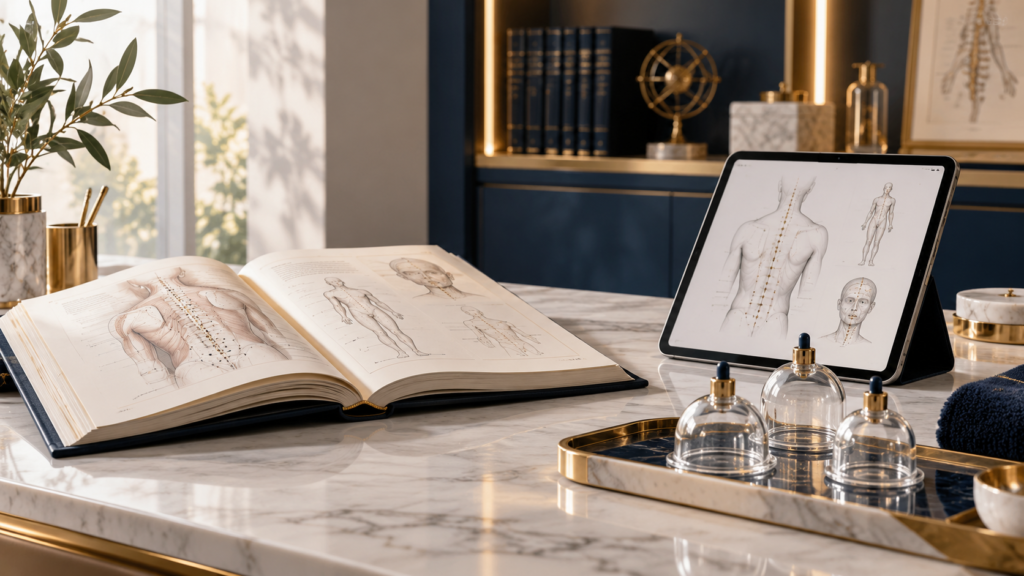
Hijama is a form of wet cupping therapy that combines controlled suction with small superficial skin incisions. The cups are briefly reapplied before the area is cleaned and appropriate aftercare is provided.
ABOUT HIJAMA
What Is Hijama?
Hijama is a traditional form of wet cupping therapy in which cups are placed on selected areas of the body to create controlled suction. After the initial cupping stage, small superficial skin incisions are made using sterile single-use equipment, and the cups are briefly reapplied.
Hijama has been practiced in different cultures for centuries and also has an established place in Islamic tradition. Modern Hijama practice should include appropriate health assessment, careful point selection, hygiene procedures and infection-control standards.
EXPLORE HIJAMA BASICS →
Hijama at a Glance
01
Type
Wet cupping therapy
02
Method
Suction + superficial skin incisions
03
Equipment
Sterile single-use
04
Approach
Individual assessment
05
Aftercare
Guidance after the session
How Does Hijama Work?
A Hijama session typically follows a structured process designed to combine careful assessment, controlled cupping and appropriate hygiene standards.
Assessment
Your health history, current concerns and treatment goals are reviewed before the session.
Initial Cupping
Cups are placed on selected areas to create controlled suction.
Superficial Incisions
Small superficial skin incisions are made using sterile single-use equipment.
Second Cupping Stage
The cups are briefly reapplied to allow a limited amount of blood to collect.
Cleaning & Aftercare
The area is cleaned carefully and appropriate aftercare guidance is provided.
The exact number of cups, treatment areas and session approach may vary according to individual assessment and suitability.
What Is the Difference Between Hijama and Dry Cupping?
Hijama and dry cupping both use suction, but the main difference is whether superficial skin incisions are involved.
READ THE FULL WET VS DRY CUPPING GUIDE →
Hijama / Wet Cupping
- Uses controlled suction
- Includes small superficial skin incisions
- Cups are briefly reapplied
- Requires appropriate hygiene and single-use equipment
Dry Cupping
- Uses suction only
- No skin incisions
- No blood is collected
- Often used for muscle relaxation and recovery support
SAFETY FIRST
Is Hijama Safe and Suitable for Everyone?
Safe practice also depends on appropriate assessment, hygiene, infection-control procedures and sterile single-use equipment.
Your safety and wellbeing are always our priority
When Extra Caution May Be Needed
Blood-thinning medications
Bleeding disorders
Severe anemia
Active skin infection or open wounds
Pregnancy in certain treatment areas
Uncontrolled or serious medical conditions
Always inform your practitioner about your medical history, medications and current health conditions before treatment.
WHY PEOPLE CHOOSE HIJAMA
Why Do People Choose Hijama?
People may choose Hijama for different reasons, including muscle tension, physical recovery, general wellbeing and traditional practice. Individual suitability and expected benefits can vary, so assessment is important before treatment.
Muscle Tension & Relaxation
Cupping may be used as part of a recovery approach for muscle tension and physical relaxation.
Pain & Mobility Support
Some people seek Hijama to support comfort and movement alongside appropriate healthcare and rehabilitation.
Recovery & Wellbeing
Hijama may be included in broader recovery and wellbeing routines, particularly after physical activity or muscle fatigue.
Traditional & Sunnah Practice
Hijama also has a long traditional history and an established place in Islamic practice.
HIJAMA & SUNNAH
Hijama in the Sunnah
Hijama has an established place in Islamic tradition and is mentioned in several narrations relating to cupping practice. Many people choose Hijama not only for wellbeing and recovery, but also because of its connection with the Sunnah.
Traditional guidance also refers to certain recommended Hijama days, while treatment timing for health concerns should still consider individual needs and clinical suitability.
FREQUENTLY ASKED QUESTIONS
Common Questions About Hijama
Is Hijama the same as wet cupping?
Hijama is commonly used to describe wet cupping therapy. It uses controlled suction followed by small superficial skin incisions, after which the cups are briefly reapplied. Dry cupping, by comparison, uses suction only and does not involve skin incisions.
What happens during a Hijama session?
A typical session begins with an individual assessment. Cups are then applied to selected areas, followed by small superficial skin incisions and a second brief cupping stage. The area is then cleaned and aftercare guidance is provided.
How long does a Hijama session take?
Session length can vary depending on the assessment, number of treatment areas and type of cupping used. Many appointments are completed within approximately 30 to 60 minutes.
Is Hijama painful?
Most people experience pressure from the cups and may feel mild temporary discomfort during the superficial skin incisions. Sensation varies between individuals, treatment areas and the technique used.
Is Hijama safe for everyone?
Hijama may not be suitable for everyone. Certain medications, bleeding disorders, severe anaemia, active skin infections, pregnancy in some treatment areas and serious medical conditions may require additional caution or make wet cupping unsuitable.
How often can Hijama be done?
1. There is no single schedule suitable for everyone. The frequency of Hijama depends on individual health status, treatment goals, recovery between sessions and practitioner assessment.
Looking for more detailed guidance? Explore our Hijama Benefits, Safety, Sunnah Hijama and Aftercare guides.
CONTINUE LEARNING
Explore More Hijama Guides
Continue exploring practical, evidence-informed guides about Hijama benefits, safety, Sunnah practice, aftercare and cupping points.
Hijama Benefits
Learn about the potential benefits of Hijama and cupping therapy.→
Wet Cupping vs Dry Cupping
Understand the key differences between wet and dry cupping.→
Hijama Safety & Contraindications
Learn when Hijama may require extra caution or may not be suitable.→
Sunnah Hijama
Explore the traditional and Islamic context of Hijama.→
Hijama Aftercare
Learn what to do after a Hijama session and what to avoid.→
TAKE THE NEXT STEP
Looking for Professional Hijama in the UAE?
Book a professional Hijama session in Dubai or Dibba Al-Fujairah, or contact us to ask about clinic and home-care appointment availability.