
HIJAMA & CUPPING THERAPY
Professional Hijama & Cupping Therapy in the UAE
Professional Hijama and cupping therapy with individualized assessment, hygienic single-use equipment and careful clinical standards. Sessions are planned according to your needs and individual suitability.
ABOUT HIJAMA
Hijama (Wet Cupping Therapy): How It Works
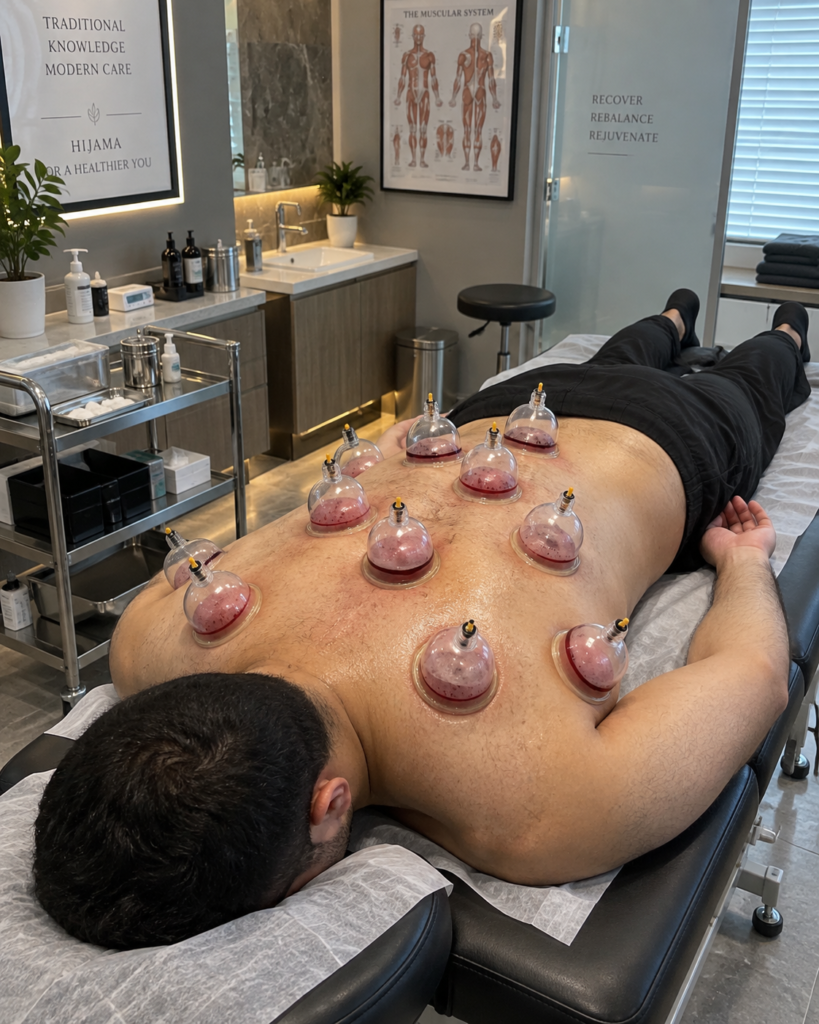
Hijama, also known as wet cupping, combines controlled suction with small superficial skin incisions in selected areas. The session is planned according to your assessment, individual needs and suitability.
At Hijama UAE, each session begins with a brief review of your health history and session goals. Hygienic single-use equipment and appropriate infection-control procedures are used throughout the process.
A Typical Hijama Session
01
Assessment
Review your health history and treatment goals
02
Cupping Area Selection
Suitable cupping areas are selected according to your assessment and individual needs.
03
Sterile Preparation
Sterile single-use equipment and appropriate skin preparation.
04
Wet Cupping Procedure
Controlled suction with small superficial skin incisions.
05
Aftercare Guidance
Clear aftercare guidance following your Hijama session.
CONDITIONS & GOALS
Common Concerns People Ask About Hijama
Hijama may be considered as a complementary option for selected pain, tension and recovery-related concerns. Individual assessment and suitability should always come first.
Migraine & Headache
Cupping may be considered as a complementary option for some people with migraine or recurrent headache symptoms.
Back & Neck Pain
Cupping may be used as part of a broader approach for muscle tension, stiffness and selected types of back or neck pain.
Fibromyalgia
Some people with fibromyalgia explore cupping as a complementary approach for pain and muscle discomfort, although evidence remains limited.
Knee Osteoarthritis
Cupping may be considered as a complementary option for knee pain and stiffness alongside appropriate assessment and management.
Muscle & Joint Pain
Cupping may be considered for selected muscle and joint pain, tension and stiffness as part of an individualized care plan.
Sports & Muscle Recovery
Recovery-focused cupping may be considered for post-activity muscle tension, soreness and general recovery needs.
SAFETY FIRST
When Extra Caution May Be Needed
Hijama should always begin with an individual assessment. Certain health conditions, medications and circumstances may require additional precautions, modification of the session or avoiding wet cupping altogether.
Safety, suitability and appropriate assessment come first.
Extra Caution May Be Needed For:
Blood-thinning medications
Bleeding disorders
Severe anemia
Active skin infection or open wounds
Pregnancy or postpartum considerations
Uncontrolled or serious medical conditions requiring medical clearance
Always inform your practitioner about your medical history, medications and current health conditions before your session.
POTENTIAL BENEFITS
Potential Benefits of Hijama
Research suggests that cupping may provide short-term support for pain, muscle tension and recovery in some individuals, although the quality of evidence varies by condition.
Pain Relief Support
Cupping may help reduce pain in some musculoskeletal conditions, particularly in the short term.
Muscle Relaxation
May help reduce localized muscle tension and promote a feeling of relaxation.
Recovery Support
May be used as part of a broader recovery plan following physical activity or muscle fatigue.
Mobility & Stiffness
Reduced pain or muscle tension may help some people move more comfortably.
Local Circulation
Cupping temporarily increases blood flow in the treated skin and superficial tissues.
Individual Wellbeing
Some people report feeling relaxed or refreshed after cupping, although responses vary between individuals.
TAKE THE NEXT STEP
Ready to Book Your Hijama Session?
Choose your preferred clinic and book your session with our team.
FREQUENTLY ASKED QUESTIONS
Hijama & Cupping Therapy FAQs
What is Hijama and how does it work?
Hijama, also known as wet cupping, uses controlled suction on selected areas of the body followed by small superficial skin incisions. The session should begin with an individual assessment to determine suitable areas and ensure the treatment is appropriate for the person.
What is the difference between wet cupping and dry cupping?
Dry cupping uses suction only and does not involve any skin incisions. Wet cupping, or Hijama, combines suction with small superficial skin incisions to remove a limited amount of blood from selected areas.
Who may need to avoid or delay Hijama?
Hijama may not be suitable for people with bleeding disorders, severe anemia, active skin infections, open wounds, or certain uncontrolled medical conditions. People taking blood-thinning medication or who are pregnant should discuss suitability with a qualified healthcare professional before treatment.
Is Hijama painful?
Most people describe Hijama as mild to moderately uncomfortable rather than painful. You may feel pressure from the cups and a brief stinging sensation during wet cupping, but discomfort is usually short-lived.
Are there any side effects after Hijama?
Temporary circular marks, mild skin tenderness, redness, or lightheadedness can occur after Hijama. Serious complications are uncommon when proper hygiene, sterile single-use equipment and appropriate clinical precautions are followed.
What should I do before and after Hijama?
1. Before Hijama, stay well hydrated, avoid arriving overly hungry or dehydrated, and tell your practitioner about your medications and medical history. After the session, keep the treated areas clean, stay hydrated, avoid strenuous exercise for the rest of the day, and follow the aftercare instructions provided by your practitioner.